What must a product label include? It depends on the product. General goods follow the rules of the Office of the Consumer Protection Board (OCPB), while food and cosmetics follow the more detailed rules of the Thai FDA. This article sums up all three checklists, plus the mistakes brand owners most often make when ordering label printing.
- Product name or product type
- Name and address of manufacturer or importer
- Quantity, size, or net weight
- Directions for use, recommendations, and warnings
- Manufacturing date, expiration date, or batch number
- Thai FDA number, for food or cosmetics
Which rules does your label fall under?
Before designing, check which type your product is, because each agency requires different information on the label.
General products
Household items, electrical appliances, toys, clothing, leather goods, handmade products
View 11-point checklist ↓Thai FDAFood and beverages
Packaged food, snacks, sauces, beverages, dietary supplements
View the 10-point checklist ↓Thai FDACosmetics
Skincare, serums, creams, soaps, shampoos, perfumes, all types of cosmetics
View 11-point checklist ↓General product labels (OCPB controlled-label products)
The Label Committee Notification on the Characteristics of Labels for Controlled-Label Products (No. 3), 2022, requires labels to show the following:
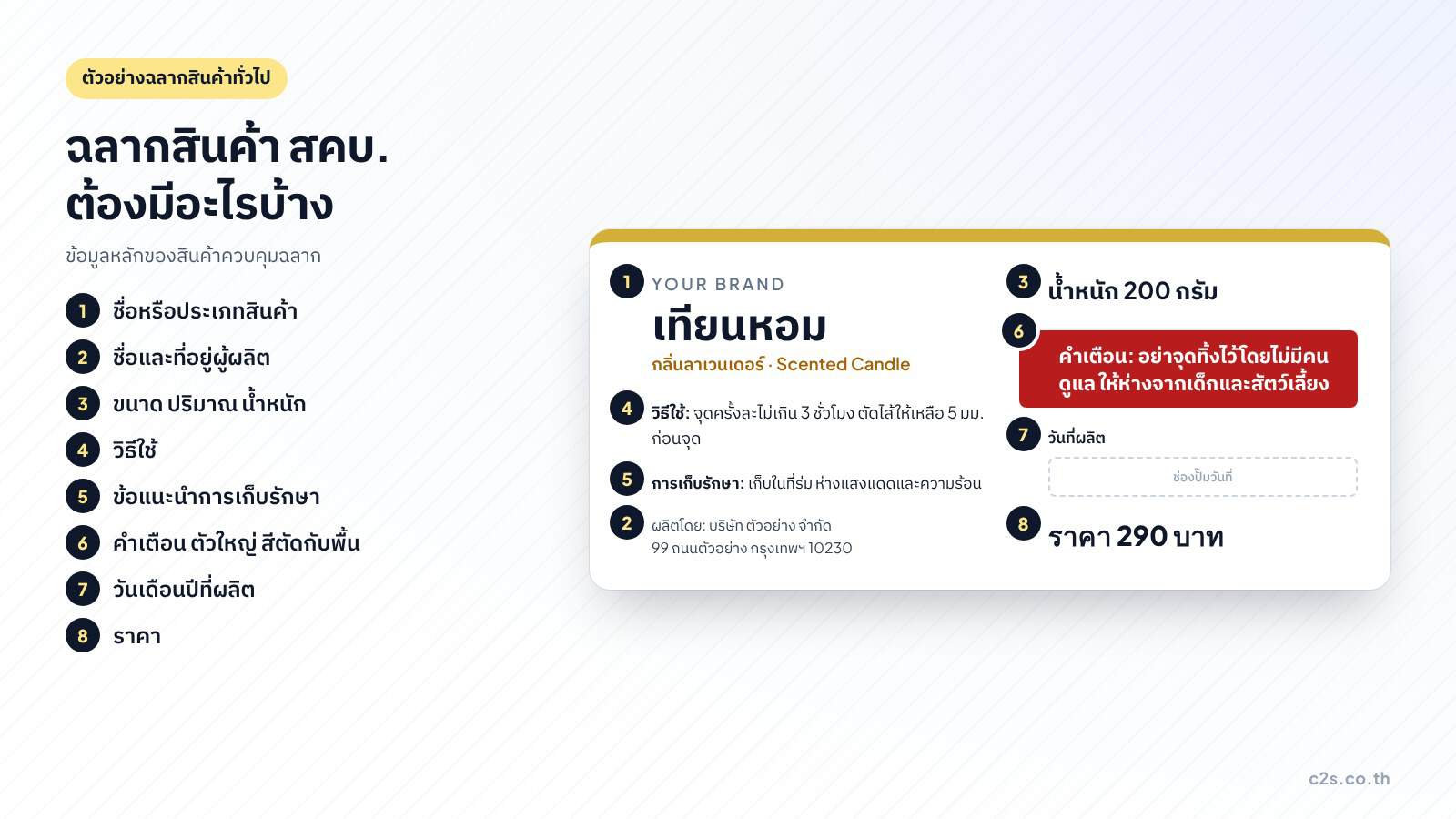
- Product name or typeSo it is instantly clear what the product is
- Manufacturer name or registered trademarkFor products made in Thailand
- Importer name and country of originFor imported products
- Manufacturer or importer address
- Size, dimensions, quantity, volume or weightUnits may be written in full, abbreviated or as symbols
- Directions for useSo consumers use the product correctly
- Instructions for use or storage
- Warnings, prohibitions, or cautionsText must be larger than other information and contrast with the label background
- Manufacturing dateIf exact date cannot be specified, week or month and year can be used
- Expiry or “use before” dateOnly for products with a limited shelf life
- Price in Thai bahtOther currencies may be added
What must food product labels include?
Packaged food sold to consumers follows Ministry of Public Health Notification No. 367 (2014) and its amendments. Labels must include Thai text; other languages may be added.
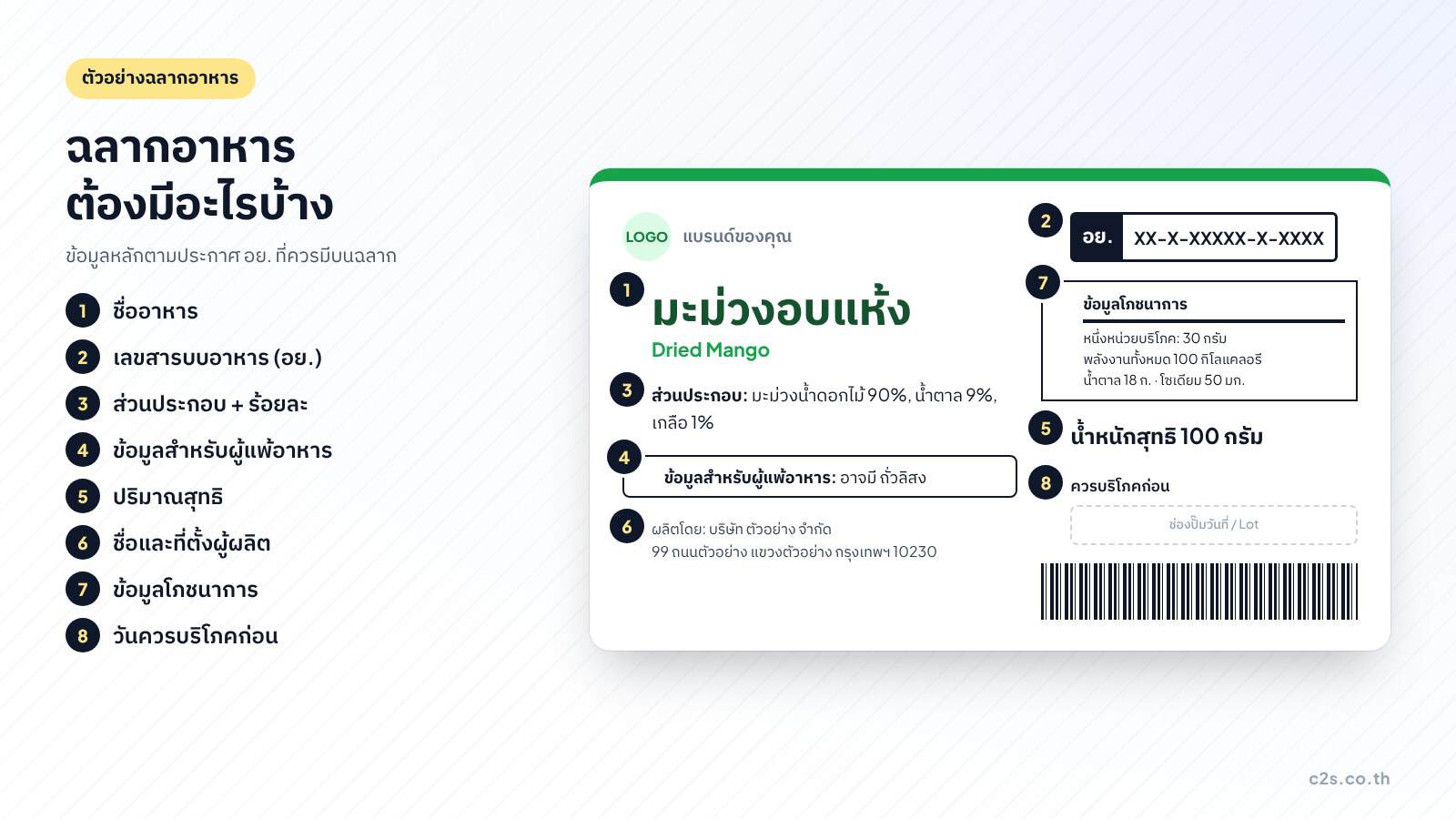
- Food nameCommon name, descriptive name, or trade name with description
- 13-digit food serial number inside the Thai FDA markGet the number from the Thai FDA before ordering label printing
- Name and address of the manufacturer, repacker or importerImported products must also show the manufacturer name and country of origin
- Net quantity in metric systemSolids indicate weight, liquids indicate volume
- Main ingredients in descending order with approximate percentagesSome exceptions apply, such as single-ingredient foods
- Allergen informationUse “contains” or “may contain” below the ingredients
- Food additives, colours, and flavouringsSpecify group name along with specific name or INS number
- “Best before” or “expiry” dateShelf life up to 90 days: day, month and year. Over 90 days: month and year are enough
- Warnings, storage and cooking instructionsWhere required for that type of food
- Nutrition label or GDAOnly for foods specified by notification or when making nutrition claims
Allergens that must be declared: cereals containing gluten, crustaceans, eggs, fish, peanuts, soybeans, milk and lactose, tree nuts, and sulfites at 10 mg/kg or more.
Some food groups, such as infant food, dietary supplements and foods with nutrition claims, have extra notifications. New nutrition labeling rules were issued in 2023 and took effect on 2 July 2024, so check with the Thai FDA before designing.
What must cosmetic product labels include?
The Cosmetic Committee Notification on Cosmetic Labels, 2019, requires clearly legible Thai text and the following information:

- Cosmetic name and trade nameMust stand out more than other text
- Cosmetic type or categoryMatching the notification
- Directions for use
- Name and location of manufacturer or importerImported products must specify the manufacturer's name and country of origin
- Net quantity
- Batch / lot number
- Manufacturing month and year
- Month and year of expiry
- WarningAs required by official announcements, such as for hair dyes or sunscreens
- Notification number10 or 13 digits
- Names of all ingredientsListed in descending order by quantity
Preparing product labels before printing: common mistakes

Leave space to stamp dates
Manufacturing date, expiry date and lot number change every run. Leave a blank space to stamp them later, so one label print run covers many lots. Test the stamp ink on the actual material first, because glossy film takes ink less easily than paper.
Measure the real text size
Print the file on an office printer at 100% and measure the text height with a ruler. The smallest text on the label must not be below the size required by the notification.
Warnings must be prominent
Warnings must be larger and in a color that contrasts with the background. On clear labels, print a white underbase under the text so it does not blend into the product color.
Choose material by packaging
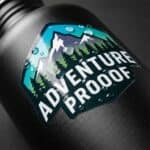
For chilled bottles or anything that gets wet, use waterproof PET stickers. For paper boxes and kraft bags, paper stickers are better value.
Allow safe margins
Add 3 mm bleed around the artwork and keep important text at least 2–3 mm from the cut line, so the serial number and barcode are not cut off.
Get your number before printing
Food serial numbers and cosmetic notification numbers must come from the Thai FDA first. Never print large runs with a placeholder number, because fixing it later means reprinting the whole batch.
Read the full label file guide in What to check before sending sticker print files, and compare label materials in PP, PVC and PET stickers: what is the difference?
Choose the right label material for your product
| Product | Recommended materials | Why choose us |
|---|---|---|
| Beverage bottles, sauces, refrigerated products | Clear / glossy white PET | Waterproof, won’t go soggy, tear-resistant |
| Glass bottles, clear bottles | Clear sticker + white underbase | Label blends into the bottle, text stays sharp |
| Paper boxes, kraft paper bags, bakery sleeves | Paper stickers | Glossy white, matte white or kraft — best value |
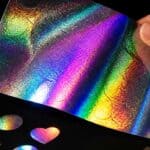
| Cosmetics, perfumes, skincare | Foil Stickers | Premium look that stands out on the shelf |
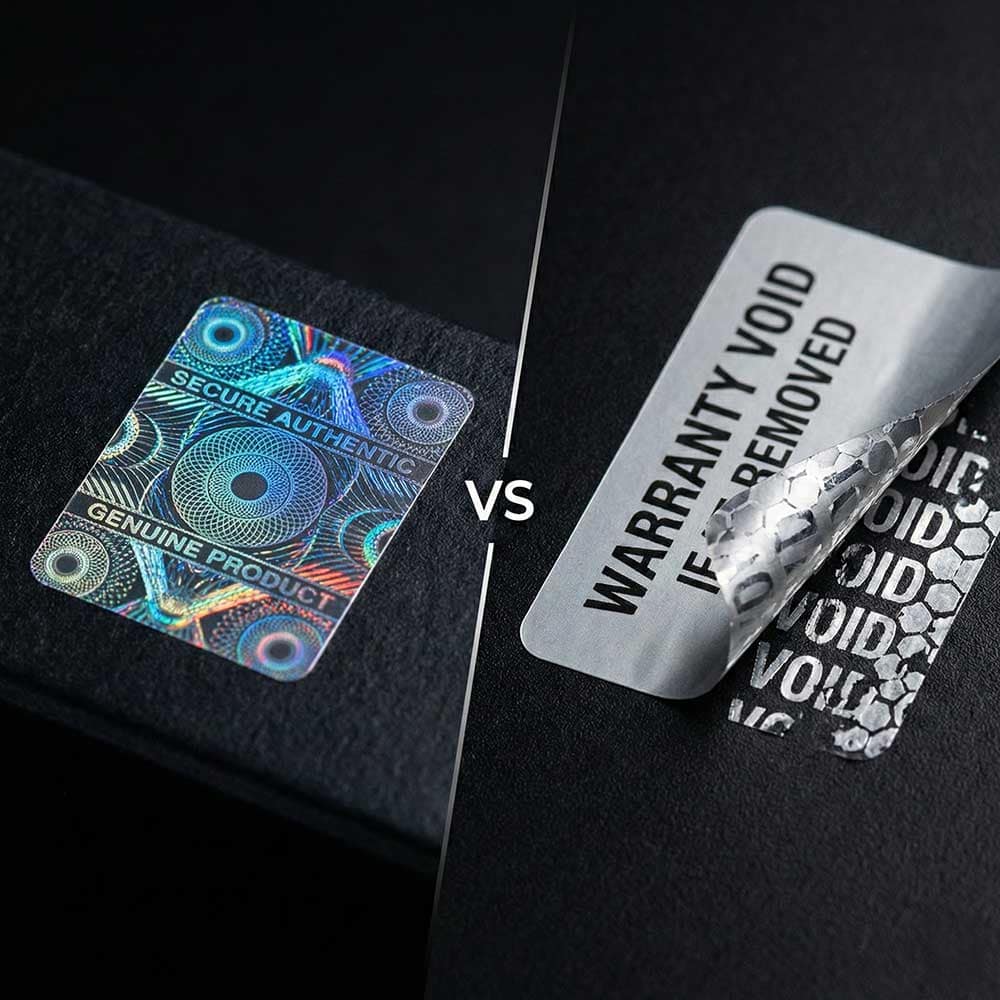
| Brands facing counterfeit products in the market | VOID anti-counterfeit labels | Leaves a VOID mark when peeled — authenticity can be checked |
Compare every material, price and minimum order on our product label printing page, or browse sticker printing in every material.
Frequently asked questions about product labels
Which products require controlled labels?
As a general rule, products made or imported for sale to consumers are OCPB controlled-label products. Products covered by their own labeling laws, such as food, drugs and cosmetics, follow Thai FDA rules instead. If you are unsure which applies, ask the OCPB or the Thai FDA before designing the label.
What does a product label consist of?
Almost every label needs the product name, the manufacturer or importer with address, the quantity, directions and warnings, and the manufacturing or expiry date. Food and cosmetics also need a Thai FDA number and an ingredient list.
Do product labels have to be in Thai?
Food and cosmetic labels sold in Thailand must include Thai text; other languages may be added. Imported products usually get a Thai sticker label applied over or next to the original packaging.
What is the minimum text size on a label?
For OCPB controlled-label products, text must be at least 2 mm high, or 1.5 mm if the label is smaller than 35 cm². For food, the food name must be at least 2 mm (1 mm if the label is under 35 cm²), and ingredients, allergen information and dates at least 1 mm on labels up to 100 cm².
The label is tiny and everything won’t fit. What can I do?
Cosmetics with a label area under 20 cm² may show only the minimum: name, month and year of manufacture, month and year of expiry, warnings and ingredients, with the rest on the outer box or an insert. For food labels under 35 cm², the ingredient list may move to the outer packaging.
Do manufacturing and expiry dates have to be printed on the label?
No. If the dates change every lot, leave a blank space to stamp or print them later, so one label order works for many lots.
Can I add the Thai FDA logo or certification marks myself?
No. The Thai FDA mark, notification numbers and certification marks such as TIS or Halal may only be used once the product has been approved or certified.
How long does label printing take at C2S?
About 7 days of production after file approval, then 1–3 business days for delivery anywhere in Thailand. These are sheet labels; we do not produce roll labels.
Sources
- Label Committee Notification on the Characteristics of Labels for Controlled-Label Products (No. 3), 2022 · OCPB
- Food labeling and nutrition labeling laws · Thai FDA
- Cosmetic Committee Notification on Cosmetic Labels, 2019 · Thai FDA
Label details ready? Choose the material, size and quantity to see the price per label instantly, with a PDF quotation.
See product label prices →Browse stickers in every material